
The choice of a hedge trimmer depends on three parameters that most guides gloss over: the spacing of the teeth, the actual cutting speed under load, and the compatibility of the battery platform with the rest of your tool collection. Price or brand come only after these technical criteria.
Tooth Spacing and Actual Cutting Diameter of the Hedge Trimmer
The spacing between the teeth of the blade determines the maximum diameter of branches that the device can cut cleanly. A spacing of a few centimeters is suitable for soft shoots of privet or boxwood. For woody branches of thuja or photinia, a much wider spacing is required; otherwise, the branches get stuck between the teeth instead of being cut.
We regularly observe users disappointed by a device that is powerful yet fails simply because the tooth spacing does not match the diameter of the wood to be cut. Before looking at watts or volts, measure the average diameter of the branches in your hedge: this is the data that guides everything else.
On the blade side, dual-action blades (where both blades move in opposite directions) reduce vibrations and improve cutting sharpness. Single-action blades, where only the upper blade moves, are sufficient for young hedges but can strain the wrist more during long sessions. A detailed comparison of available models, like the one offered by taille-haie-warrior.com, helps to quickly sort based on this criterion.
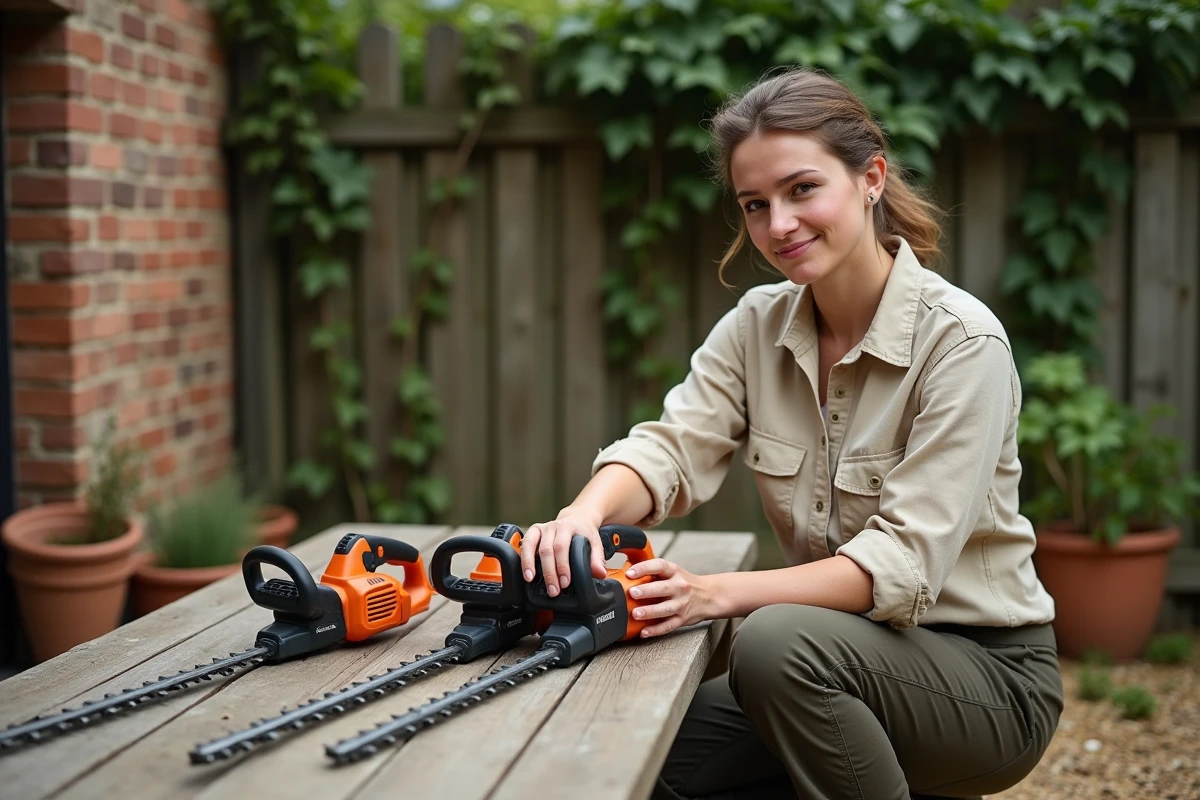
Battery, Corded, or Gas: Technical Arbitration Based on Hedge Length
The debate between these three types of motors is not just a matter of comfort. It involves constraints of torque, autonomy, and, recently, local noise regulations.
Battery Hedge Trimmer: Platform Before Voltage
The share of battery hedge trimmers has surpassed that of gas models in value in the DIY channel in France in 2024, according to GfK data. This shift is explained by the rise in fuel prices and municipal restrictions on noise. The city of Lyon, for example, modified its neighborhood noise ordinance in July 2024 to explicitly include gas hedge trimmers, with reduced time slots on weekends.
The real criterion for choosing a cordless model is the battery platform. If you already own a brush cutter or blower from a specific brand, sticking to the same platform allows you to share chargers and batteries. Buying a hedge trimmer from a different brand just to save a few euros means financing a second battery ecosystem, which negates the initial savings.
Gas Hedge Trimmer: For Which Exact Profile
A gas engine remains relevant in only one specific case: a dense and long hedge line made of hard wood, with no electrical outlet nearby. For a hedge of old thuja spanning several meters, the continuous torque available from a gas engine has no equivalent in battery models at a comparable budget.
Outside of this scenario, gas models accumulate disadvantages: higher weight, carburetor maintenance, oil-gas mixing, and increasing noise restrictions. Gas is no longer justified for a medium-sized garden with mixed or leafy hedges.
Corded: The Most Direct Power-Price Ratio
The corded hedge trimmer remains the most rational choice for a modest-sized garden with accessible outdoor power. No battery to manage, no autonomy limits, and a purchase cost significantly lower for equivalent power. The cable constraint obviously limits the range, but a quality extension cord is sufficient in most configurations.
Blade Length and Weight: The Compromise That Affects Fatigue
A long blade covers more surface area with each pass, but it also adds weight to the device and makes cutting the top of a tall hedge more strenuous on the shoulders. We recommend reasoning based on the height and thickness of the hedge:
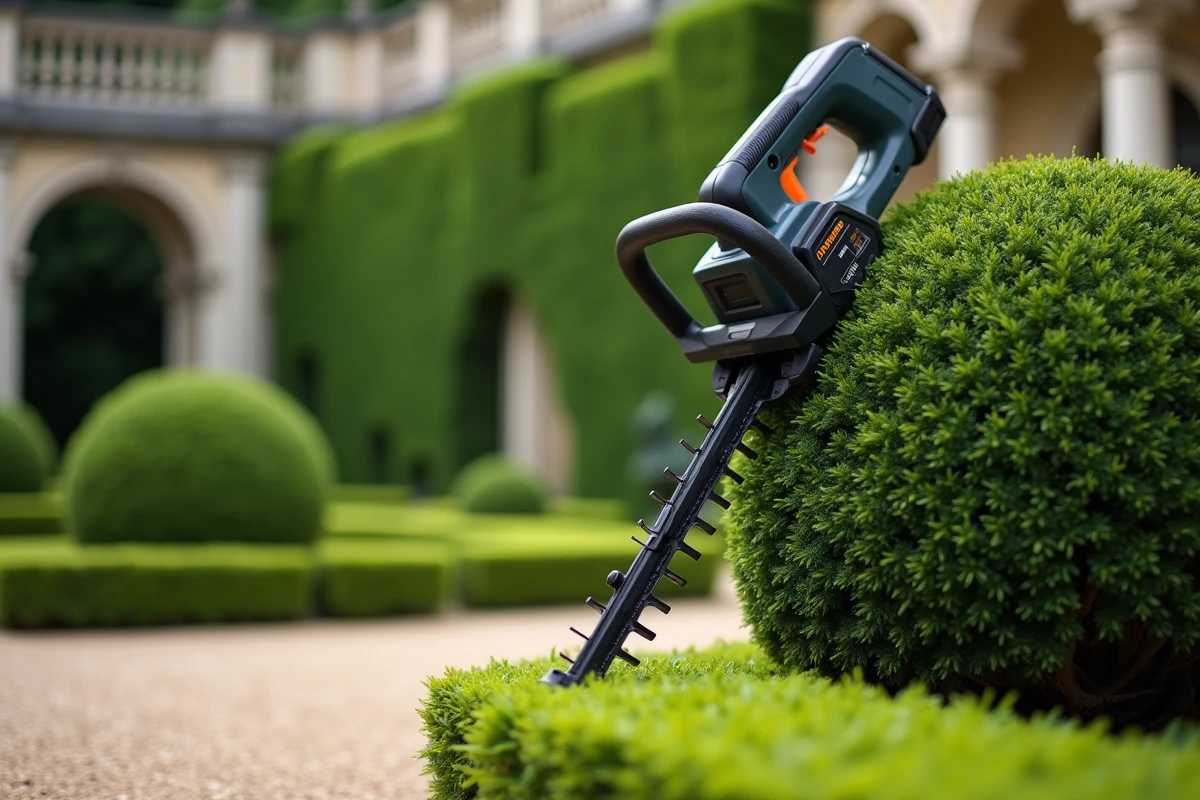
- Low hedge (under one meter, like boxwood or spindle): a short blade and a lightweight device allow for precision work without fatigue, including for topiary trimming.
- Medium-height hedge (between one and two meters, like laurel or photinia): a medium-length blade offers the best compromise between coverage and maneuverability.
- Tall hedge (over two meters, like Leyland cypress): a pole or telescopic hedge trimmer avoids the need for a ladder. Working on a ladder with a hedge trimmer at arm’s length is the leading cause of accidents related to this tool.
The total weight, including the battery for cordless models, varies significantly from one model to another. Beyond a certain threshold, muscle fatigue reduces cutting quality after about twenty minutes. Weigh the device in-store before buying, arms extended at shoulder height: this is the actual working position.
Blade Maintenance and Sharpening: What Prolongs Lifespan
A poorly maintained blade no longer cuts; it tears. Torn branches heal less well and expose the hedge to fungal diseases. After each use, it is necessary to clean the resin and dried sap on the blades with an appropriate solvent, then apply a lubricating spray.
Regular sharpening of the blades is crucial for the health of the hedge as well as the performance of the tool. A flat file or a specific sharpener allows you to restore the edge without disassembling the blade. On high-end models, some manufacturers offer blades with a non-stick coating that delays soiling, a worthwhile investment for resinous hedges.
- Cleaning the blades after each session to avoid resin buildup.
- Lubricating the blade with an appropriate spray, no thick grease that traps debris.
- Checking the play between the two blades: excessive play causes crushing instead of a clean cut.
- Storing in a dry place, with the protective sheath in place.
Blade replacement is rarely necessary if regular maintenance is followed. On most models, a well-maintained blade lasts several seasons of intensive trimming without significant loss of performance.
The best hedge trimmer is not the most expensive or the most powerful on the technical sheet. It is the one whose blade matches the diameter of your branches, whose weight remains manageable throughout the job, and whose motorization integrates with your existing equipment. The rest is marketing.