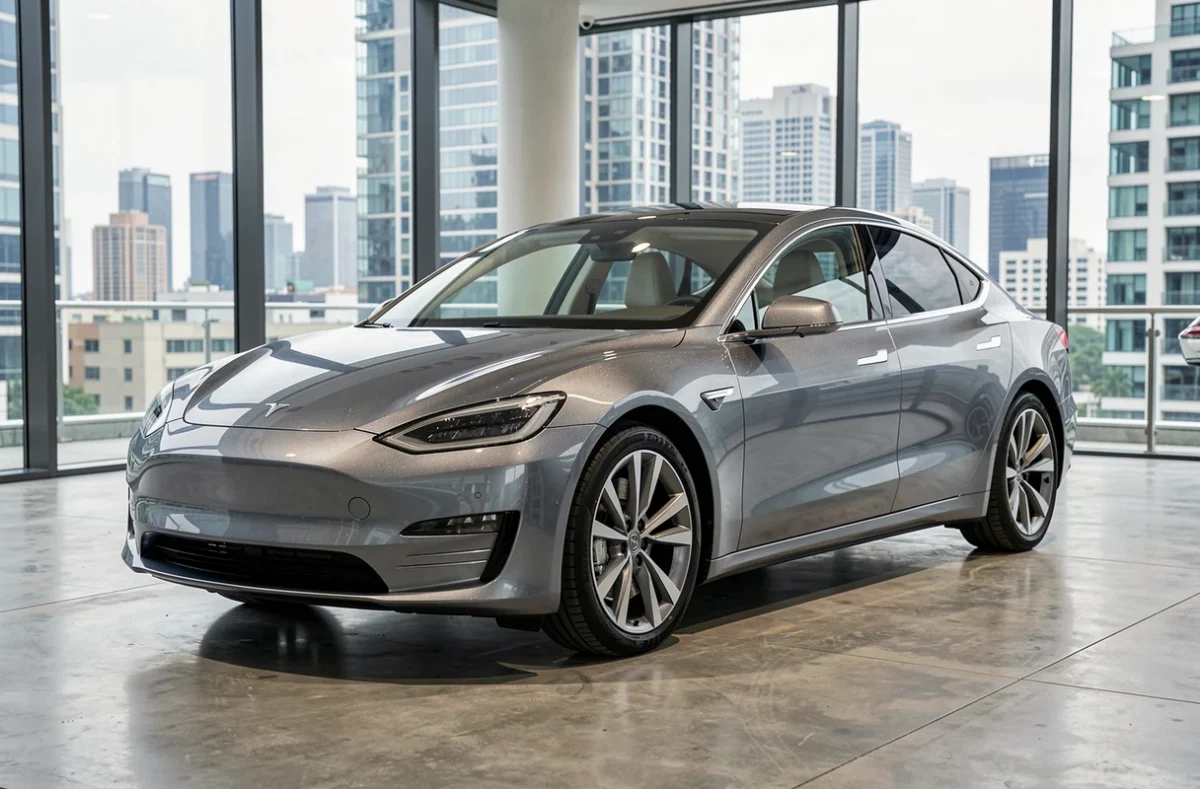
The automobile is no longer defined solely by its powertrain. Manufacturers are now integrating software layers, active safety sensors, and regulatory constraints that alter the very design of the vehicle, from the battery to the driver interface. Understanding these changes requires distinguishing three axes: CO₂ compliance and its impact on industrial timelines, active safety obligations coming into effect as of 2026, and the evolution of embedded software architectures.
European CO₂ Compliance: A Multi-Year Assessment That Changes the Game
The European regulation on CO₂ emissions is based on thresholds that each manufacturer must meet for its entire fleet sold. Until recently, this calculation was done year by year, forcing groups to adjust their sales mix each fiscal year.
The European Commission has stipulated that compliance with the targets from 2025 to 2027 will be assessed based on the average over this period. This mechanism provides greater flexibility to manufacturers: a group that sells fewer electric vehicles in 2025 can compensate with a higher volume in 2026 or 2027 without facing immediate penalties.
This flexibility has direct consequences on launch schedules. Some manufacturers may delay the production of an electric model by a few months to optimize the technical maturity of the battery, without risking a fine. Others choose to accelerate deliveries in a specific year when demand is higher, then ease the pace the following year.
To follow automotive news on Starlight Infos, this regulatory evolution is a strategic lever to watch, as it directly influences the availability of models in the French and European markets.
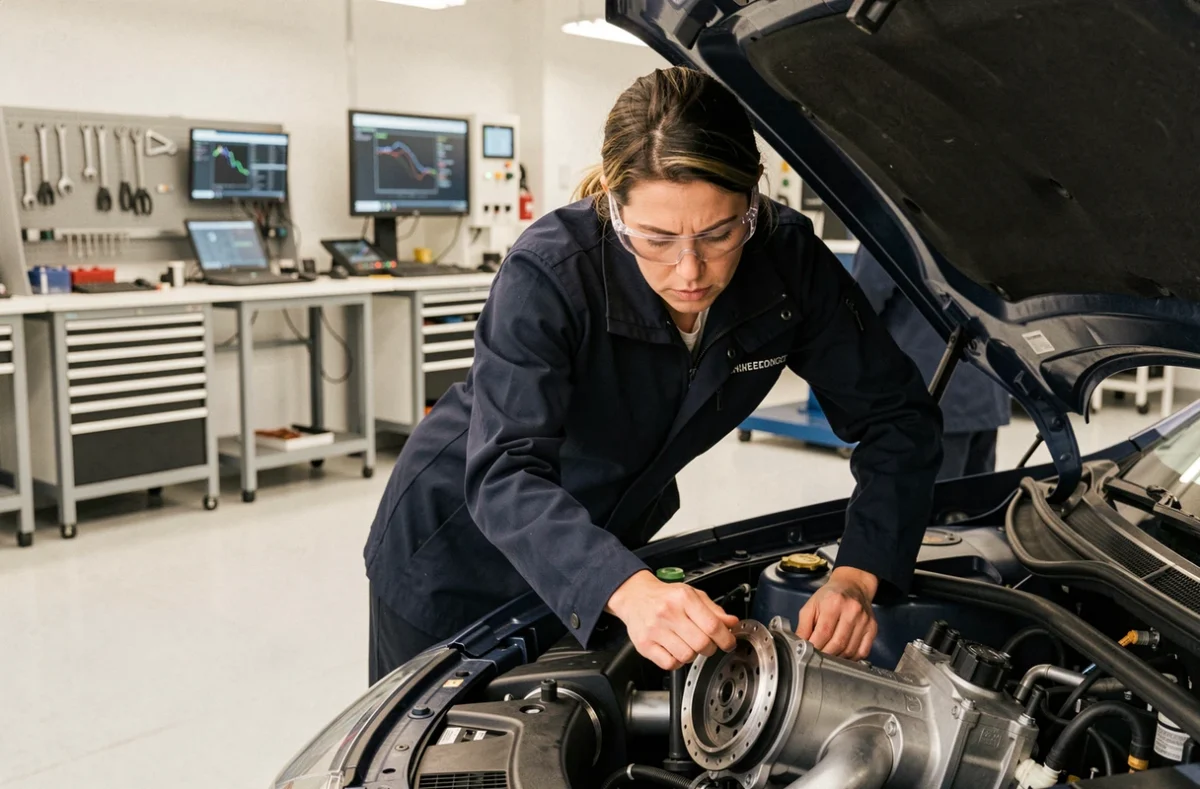
Mandatory Active Safety: What Regulations Require for New Vehicles Starting in 2026
Active safety refers to all onboard systems that intervene before or during an accident to reduce its severity, as opposed to passive safety (airbags, crumple zones) which acts after the impact.
For vehicles newly approved from July 7, 2026, European regulations impose a new wave of equipment:
- Enhanced pedestrian and cyclist detection systems, capable of identifying these users in low-light conditions or complex blind spots
- A driver distraction alert that analyzes visual behavior via a camera aimed at the driver’s seat
- Expanded emergency lane-keeping functions that activate when the vehicle detects a prolonged lack of steering control
These obligations do not only concern high-end models. Every vehicle approved after this date must integrate these technologies, which raises the production cost of city cars and light commercial vehicles.
Next-Generation eCall Arriving in 2027
The eCall system, which triggers an automatic emergency call in the event of a serious accident, has been available for several years on new European vehicles. Its current version relies on 2G/3G networks, which are being phased out in several countries.
The new generation of eCall, compatible with 4G/LTE and 5G, will be mandatory for new passenger cars and light commercial vehicles starting January 1, 2027. This transition ensures the longevity of the emergency call service in the face of the obsolescence of older mobile networks.

Software-Defined Vehicle: When Digital Architecture Takes Precedence Over Mechanics
The concept of a software-defined vehicle refers to an architecture where the vehicle’s functions, from regenerative braking to the multimedia interface, are managed by centralized software layers that can be updated remotely.
In a traditional vehicle, each function has its own electronic control unit. A recent model can have several dozen of these units, each with its proprietary software. The software-defined vehicle replaces this mosaic with a smaller number of powerful control units, driven by a common operating system.
This architecture allows for functional updates after purchase. A manufacturer can improve suspension calibration, add a parking assistance feature, or correct battery behavior by sending a software update, without needing to visit a workshop.
The Concrete Limits of the Model
The transition to a software-defined vehicle does not come without friction. Historical manufacturers must restructure their engineering teams, which have traditionally focused on mechanics, to integrate skills in software development and cybersecurity. The issue of cybersecurity for embedded systems is becoming a regulatory challenge in its own right, as a vehicle that is constantly connected exposes a much larger attack surface than a traditional model.
Dependency on updates also raises the question of software support duration. Will a vehicle sold today still receive security patches in ten years? This question remains open and could become a determining purchasing criterion.
Charging Infrastructure in Europe: A Still Very Concentrated Deployment
The adoption of electric vehicles depends as much on the availability of models as on the density of the charging network. However, the distribution of public charging stations in Europe remains very uneven. France, Germany, and the Netherlands account for 56% of the public charging points in the European Union.
This imbalance creates a tangible barrier for motorists in less equipped countries, particularly in Southern and Eastern Europe. A driver planning a long-distance trip still needs to carefully plan their charging stops in certain regions, where a fuel fill-up is available everywhere in just a few minutes.
The arrival of more affordable electric models accelerates demand, but without a proportional deployment of infrastructure, the gap between vehicle supply and actual usage is likely to persist. The coming years will determine whether the territorial network keeps pace with registrations.
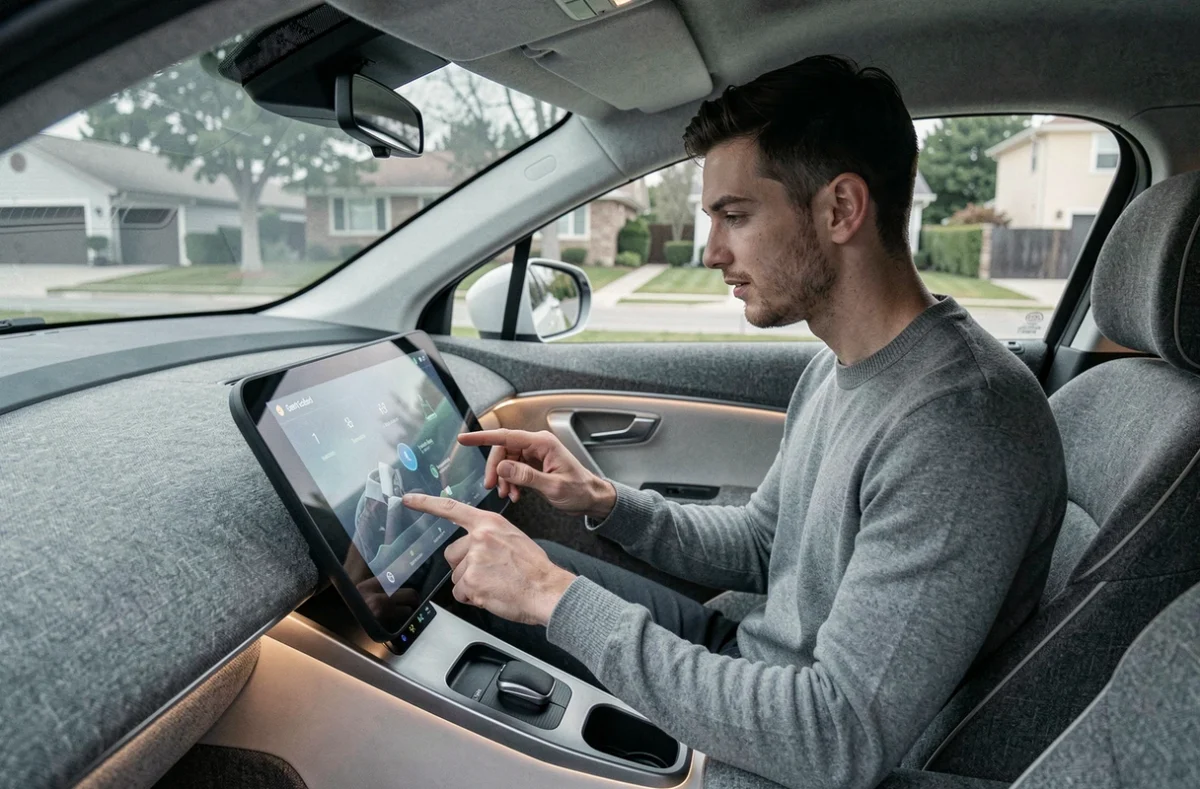
The current automotive transformation is not just about a change in powertrain. It combines a regulatory overhaul (smoothed CO₂ compliance, mandatory active safety), an architectural mutation (software-defined vehicle), and an infrastructure challenge that conditions the real adoption of electric vehicles. The next bottleneck lies less in technology than in the network of charging stations and the software support duration of connected vehicles.