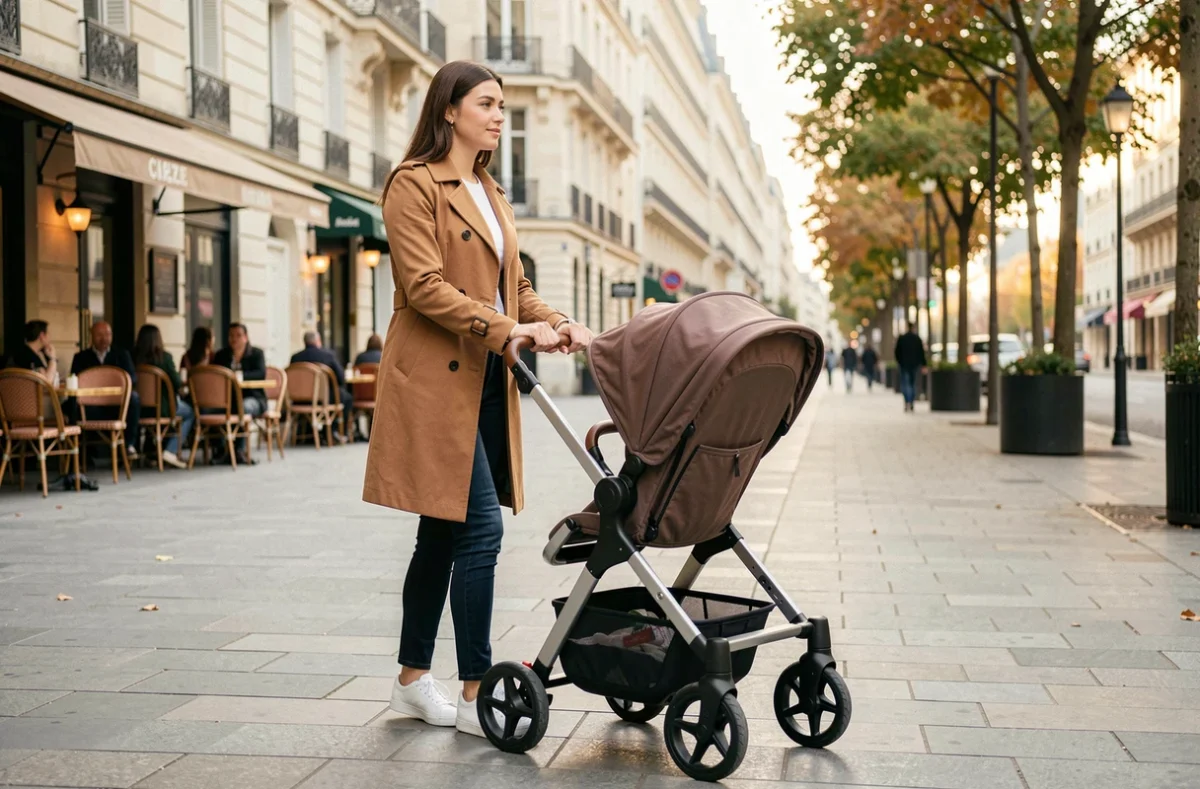
The market for compact strollers designed for urban travel has become denser in recent years. Several manufacturers are now positioning their models on a dual argument: lightness and design, which directly targets parents traveling on foot, using public transport, or between appointments. Behind this commercial argument, the real differences between models focus on specific points that product sheets do not always highlight.
“Cabin approved” mention on a compact stroller: what the promise really covers
An increasing number of lightweight strollers are sold with the mention “cabin approved.” This wording suggests that there is a universal standard guaranteeing cabin access. However, no universal approval guarantees cabin transport: the decision depends on the dimensions accepted by each airline.
Air France, for example, specifies that a stroller accepted in the cabin within the specified limits can count as the child’s cabin baggage. In other words, the stroller can replace another piece of cabin baggage, and not be added for free. A parent planning a bulky diaper bag in addition to the stroller risks having to check one of the two.
Before purchasing a model based on this travel argument, it is more reliable to consult the conditions of the chosen carrier directly, checking the maximum dimensions allowed, rather than relying on a commercial label affixed by the manufacturer. Parents who travel regularly with different airlines may notice significant discrepancies from one airline to another.
For families wondering about the iconic models in the compact segment, it is possible to learn more on Petits Bambins about the YOYO range from Stokke, which remains one of the references cited in this niche.
Lightweight stroller in the city: the trap of the Paris metro
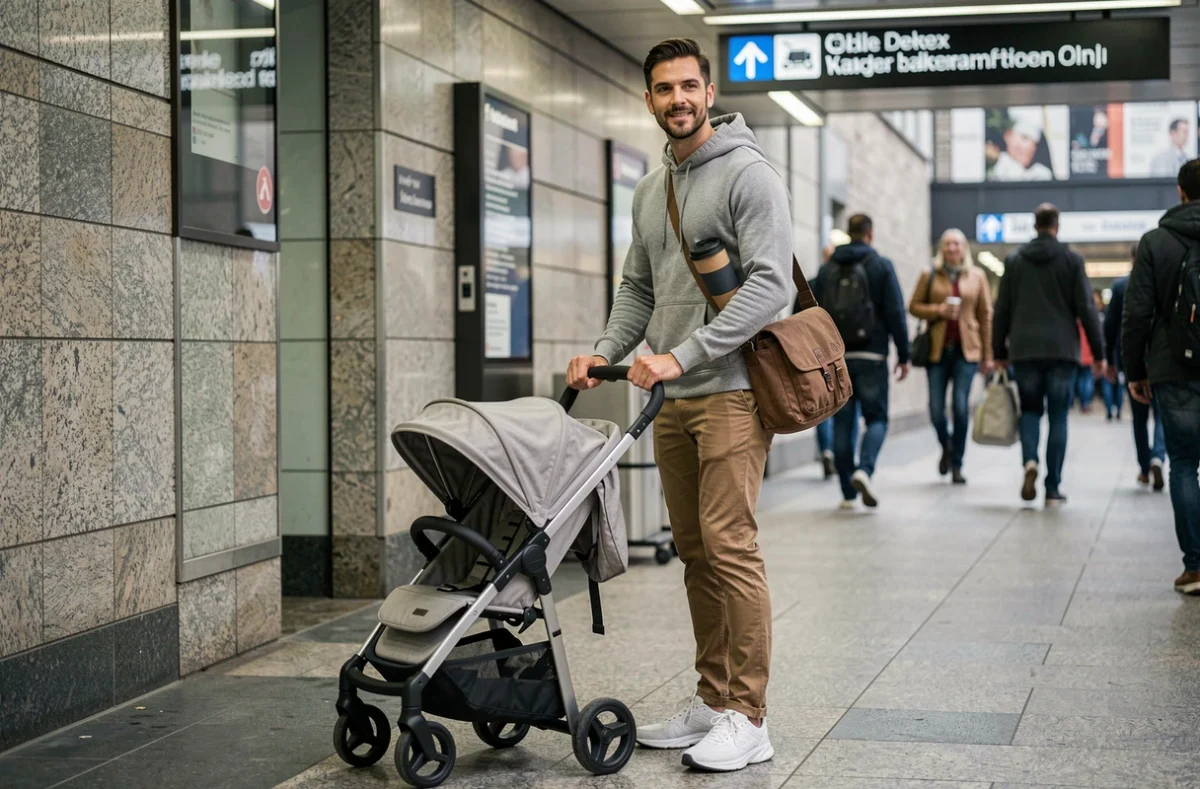
The maneuverability of a compact stroller makes perfect sense on a narrow sidewalk or in a crowded bus. In the metro, the situation is more contrasting. Several feedback reports dedicated to the Paris network highlight a structural problem: some stations impose stairs without elevators or escalators.
In these configurations, a folded stroller becomes a load to carry with one arm, while the other holds the child or a bag. The weight difference between a six-kilo model and a nine-kilo model makes a real difference. But even the lightest model on the market remains cumbersome when it comes to descending two flights of stairs during rush hour.
For these specific trips, a baby carrier may prove more practical than a compact stroller. The relevant evaluation does not concern the metro line taken overall, but rather the stations actually used on a daily basis. Checking for the presence of elevators station by station, via the RATP app, avoids a recurring unpleasant surprise.
European safety standard and real use: the limits to know
Strollers sold in Europe must comply with the EN 1888 standard, which covers stability, material strength, restraint systems, and braking. This standard has recently evolved to include specific requirements for sports strollers (jogging).
This point has a direct consequence: an ordinary compact stroller should not be used for running without verifying its compliance for that use. The swivel wheels typical of urban models are not designed to absorb the repeated shocks of running on pavement. Some manufacturers offer optional fixed wheel kits, but the structure of the chassis remains a limiting factor.
Parents who run and are looking for a versatile city/sport model must explicitly check if the model complies with the part of the standard relating to jogging strollers, and not just settle for a generic mention of sturdiness.
Technical criteria that truly differentiate urban models
Beyond the displayed weight and design, several technical elements deserve particular attention when choosing a lightweight stroller for the city:
- The type of folding (umbrella, book, compact vertical) determines the bulk once folded and the ease of storage in a trunk or apartment hallway. A one-handed fold makes a difference when holding your child with the other.
- The capacity of the lower basket varies greatly from one model to another. Some baskets can hold several kilos of groceries, while others are limited to a small bag. This data is rarely highlighted in sales arguments focused on style.
- The width of the chassis affects passage through store turnstiles, subway turnstiles, and elevator doors. A difference of a few centimeters can make a daily commute smooth or cumbersome.
- The recline of the backrest and compatibility for newborns (with or without a supplementary carrycot) define the actual duration of use of the model, from the first weeks up to three or four years of the child.
Stylish stroller: when design influences price without improving comfort
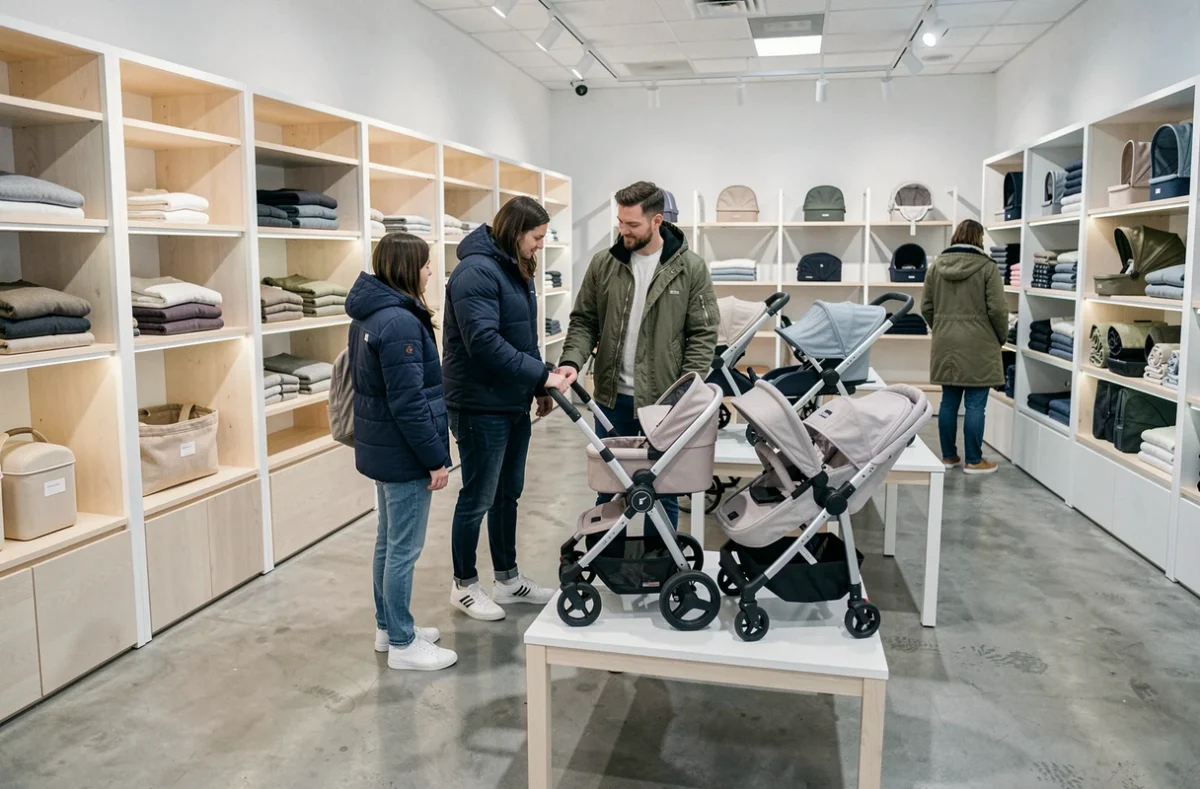
The “fashion” positioning of certain brands translates into seasonal colors, collaborations with designers, and refined textile finishes. These elements contribute to the pleasure of use, but design does not have a direct correlation with the child’s comfort.
The padding of the seat, the ventilation of the backrest in summer, the quality of the shock absorbers on the front wheels: these parameters fall under engineering, not artistic direction. Two models at the same price can offer very different levels of comfort for the child while having a comparable aesthetic appearance.
The price differences between a sober model and its “limited edition” version sometimes reach several dozen euros for fabrics or accessories that do not contribute anything in terms of safety or ergonomics. Comparing technical features at equivalent prices remains the most reliable method to avoid paying a purely aesthetic premium.
Ultimately, the choice of a lightweight stroller for urban use relies less on appearance than on the suitability between the model and the actual journeys made. A subway station without an elevator, an airline with strict rules, or mixed city-jogging use are concrete constraints that weigh more than the color of the canopy.