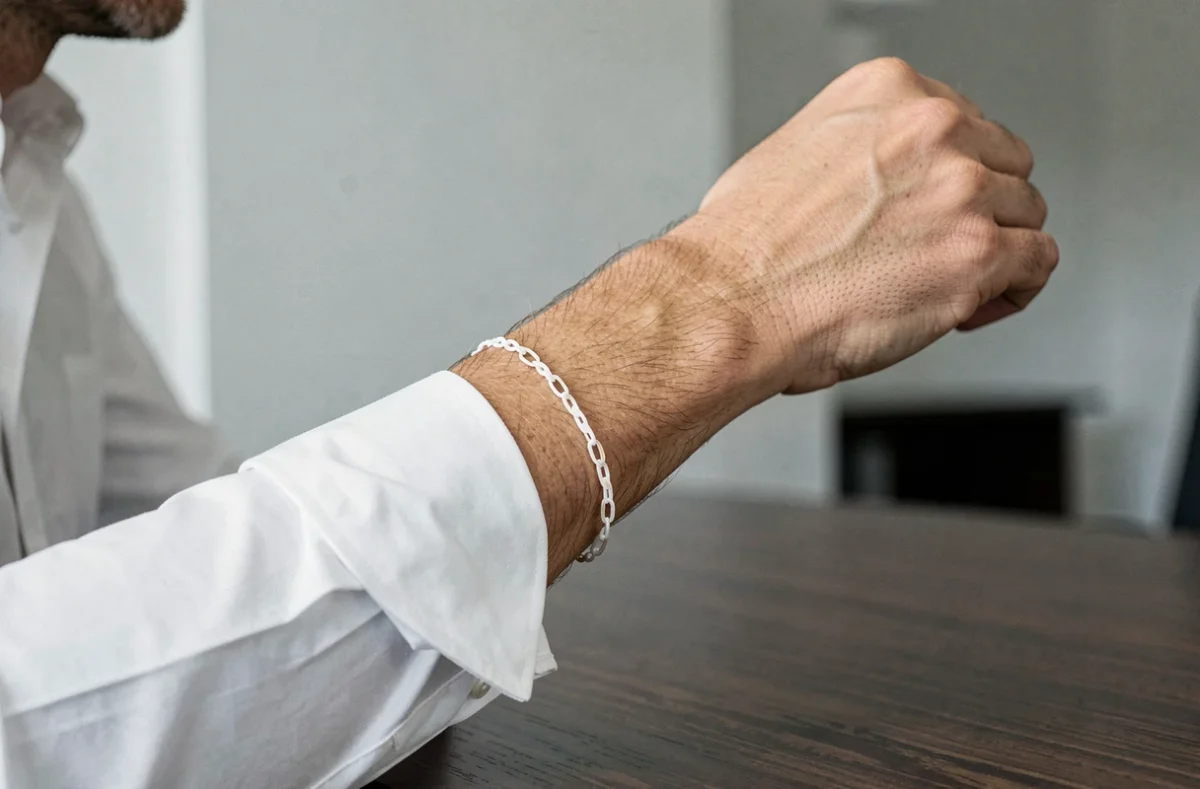
White gold is an alloy whose silver color does not come from the raw metal. A bracelet stamped 750 (which means 18-karat gold with 75% pure gold) gets its cool and luminous hue from a surface treatment called rhodium plating, a thin layer of rhodium deposited on the alloy. This technical feature influences both the aesthetics, maintenance, and wearing comfort of a men’s white gold jewelry piece.
Rhodium Plating and Alloy Composition: What Distinguishes White Gold from Yellow Gold
White gold does not exist in its natural state. Pure gold, yellow by definition, is mixed with metals like palladium, silver, or sometimes nickel to achieve a lighter alloy. Rhodium plating then covers the surface with a film of rhodium, a metal from the platinum group, which gives that characteristic cold and uniform shine.
This layer is not permanent. Everyday friction, contact with pool chlorine, perfumes, or household products gradually wear it down. After a few years of regular wear, a new rhodium plating may be necessary to restore the initial shine. The cost and frequency of this treatment vary depending on the jeweler and the intensity of use of the bracelet.
An elegant white gold bracelet for men is therefore distinguished from a yellow gold model by specific, more demanding maintenance, which is an integral part of owning the jewelry.
Skin Contact and Nickel: A Selection Criterion for Sensitive Skin

The 750 hallmark guarantees the proportion of gold in the alloy, but says nothing about the other metals present. A white gold bracelet may contain palladium, silver, copper, or nickel, depending on the jeweler’s manufacturing traditions.
Nickel poses a well-documented problem. It is one of the most common contact allergens. The European REACH regulation governs the release of nickel in items that come into prolonged contact with the skin, with a limit set at 0.5 µg/cm²/week. This standard applies to all parts of the bracelet that touch the wrist, including the clasp.
- Ask the jeweler for the exact composition of the alloy, not just the carat weight, to check for the presence or absence of nickel
- Prefer gold-palladium alloys, which are better tolerated by reactive skin, even if their price is generally higher
- Ensure that the clasp also meets REACH thresholds, as the clasp is often the area of maximum friction with the skin
This point is rarely addressed in style guides. Yet it is crucial for jewelry worn daily, especially when heat or sweat accelerates the release of metals.
Maintenance of a White Gold Bracelet: Actions to Preserve Rhodium Plating
The maintenance tips for white gold differ significantly from those applicable to yellow gold. Abrasive products, baking soda, and toothpaste alter the rhodium plating and accelerate its wear. Yet these are still frequently recommended tips online for cleaning gold jewelry.
The method recommended by specialized sources remains simple: lukewarm water, neutral soap (like liquid Marseille soap), and drying by dabbing with a soft, lint-free cloth. No brushing, no prolonged soaking.
- Remove the bracelet before swimming, exercising, or applying perfume to limit exposure to chlorine and chemical agents
- Store the jewelry separately from other metal pieces to avoid micro-scratches
- Plan for a refreshing rhodium plating with a jeweler when the yellow hue of the alloy begins to show through the rhodium layer
A well-maintained bracelet retains its cool and luminous appearance for several years before requiring professional treatment.

Type of Link and Thickness: Adapting the Bracelet to the Male Wrist
The choice of link influences both the visual effect and comfort. A cable link, with its flattened and regular rings, remains the most commonly worn format in men’s jewelry. It offers a flexible drape and a surface that captures the light of the rhodium plating well.
Finer links (venetian, curb) are suitable for a discreet style and layer easily with a watch. Wider or thicker links (figaro, jaseron) assert the presence of the jewelry on the wrist more, but require precise adjustment to avoid hindering movement.
The thickness of the bracelet deserves as much attention as its length. A model that is too light appears fragile on a wide wrist, while a massive bracelet can seem disproportionate on a thin wrist. Trying the bracelet on while closed and in motion gives a better idea of the final look than a simple measurement with a tape.
White Gold, Silver, or Platinum: Clarifying the Common Confusion
The visual appearance of rhodium-plated white gold, polished silver, and platinum is very similar to the naked eye. This resemblance creates a common confusion that complicates the choice.
Silver oxidizes upon contact with air and tarnishes without regular maintenance. Platinum is naturally white and does not require rhodium plating, but its weight is significantly higher and so is its price. 18-karat white gold sits between the two: more durable than silver, less heavy than platinum, but dependent on rhodium plating to maintain its hue.
The choice therefore depends on a trade-off between budget, tolerance for weight on the wrist, and willingness to maintain the jewelry over time. White gold offers the best compromise between prestige and practicality for daily wear, provided one is willing to periodically visit the jeweler for rhodium plating.