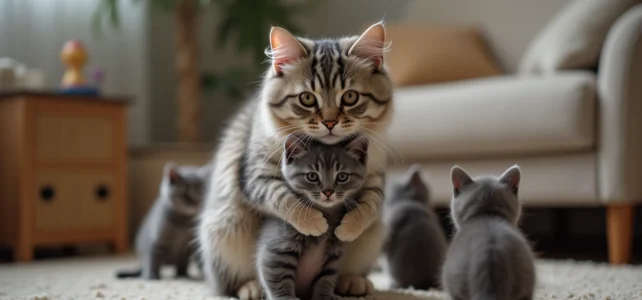
A female cat can change her nest several times in a few days, even when the environment seems stable and safe. Some litters are moved at regular intervals, without any apparent threat being detected by the human observer.
This behavior, far from being random or irrational, follows complex mechanisms that are sometimes poorly understood. The explanations go beyond simple protection against immediate dangers and touch on communication, health, and social learning within the litter.
What the movement of kittens reveals about feline maternal instinct
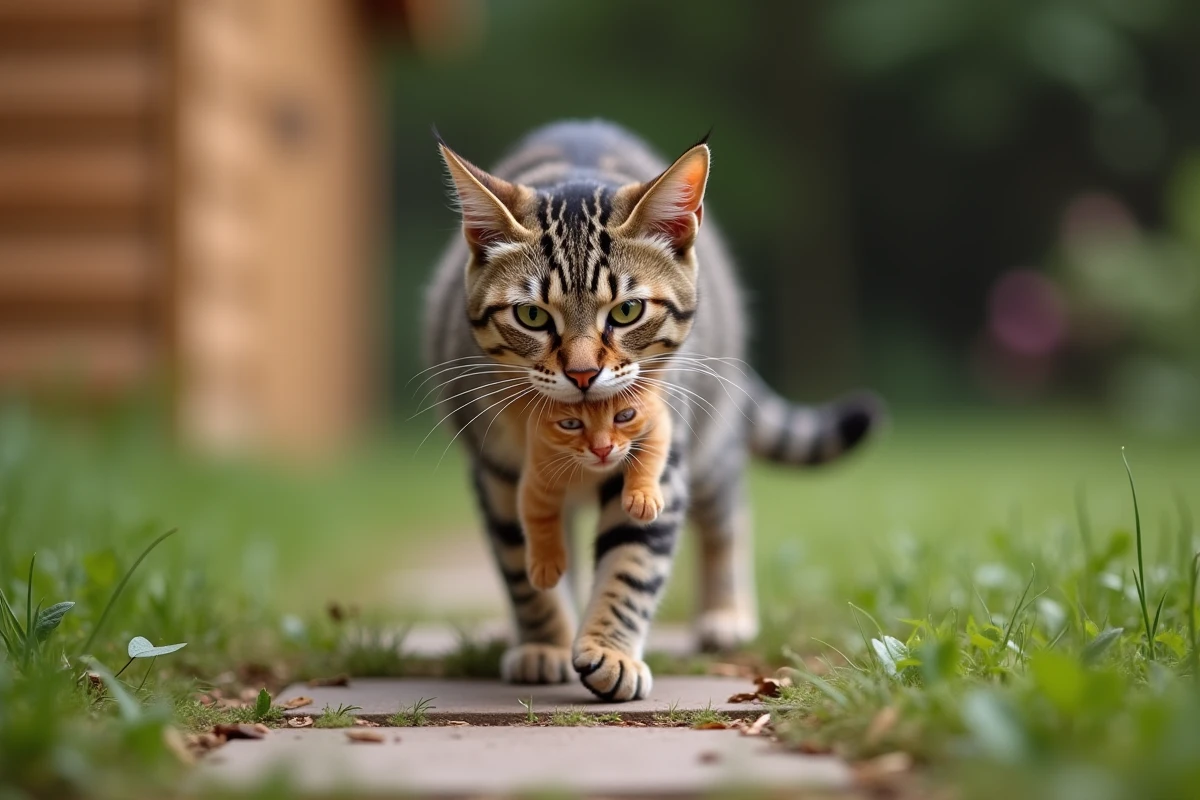
Watching a cat pick up a kitten by the scruff of its neck is witnessing the pure expression of an animal instinct refined over generations. This transport, often perceived as mundane, activates an immediate calming reflex in the little one. Immobilized, the kitten feels no discomfort: this specific grip does not cause pain but allows it to travel without resistance, guided by the safety of the mother.
The maternal mission does not stop at nursing or vigilance. The cat transmits codes, sets prohibitions, encourages or reprimands. Through these movements, she shapes caution, introduces her young to the discovery of new landmarks, teaches them to recognize smells, adapt to novelty, and integrate the first rules of the group. Each change of environment becomes a learning ground, where the kitten hones its skills: nursing, nibbling, playing, learning cleanliness, all while observing the behavior of its siblings and mother.
These micro-moves are mentioned in observations on why a mother cat moves her kittens. There, it is understood that nothing is left to chance. The behavioral development of the kitten, its future integration into a group or household, is partly played out in these early moves, orchestrated with natural rigor.
A cat’s instinct is never fixed. It evolves according to the environment, the perception of danger, or even the character of the mother. This ritual, sometimes a source of astonishment for humans, reflects a solid pedagogy. The cat organizes gradual detachment, prepares for autonomy, while ensuring the safety of her litter.
Why does a mother cat suddenly change her nest? Sometimes surprising reasons
When closely observing feline behavior, it becomes clear that changing the nest is not improvised. It responds to a strategy where the protection of the litter takes precedence over any form of routine. If the cat moves her young, it is never without reason: she perceives the slightest sign of threat or discomfort that humans do not always notice. An unusual noise, the passage of an animal, a foreign smell, a temperature variation, or too bright a light, and the decision is made.
Here are some concrete triggers that may prompt a cat to move her litter:
- Excessive human presence: too much handling, too soon, can generate stress and push the mother to seek a quieter place.
- Foreign smells or disturbances: an abnormal scent, the trace of a dog, comings and goings in the nesting area, all serve as warning signals for the cat.
- Inadequate environment: drafts, humidity, direct lighting, or noise disturbances sometimes lead the mother to reconsider her initial choice.
It can also happen that a cat perceives the discomfort or suffering of one of her kittens, even when nothing is visible. Sometimes, she prefers to isolate the affected kitten or move the entire litter. For the animal, the stress is tangible: it expresses itself through specific reactions. The new shelter chosen aims to ensure safety and calm, away from disturbances or potential dangers.
This discreet ballet, which can unsettle the inhabitants of a house, reminds us of the strength of maternal bonds in felines. It also emphasizes how necessary it is to respect the mother, her rhythm, and her signals.
Respecting this behavior: tips to help your cat without disturbing her
To live well with a cat that has just given birth, three key words must be followed: vigilance, discretion, patience. The first step is to provide a calm refuge, away from traffic, where the temperature remains stable and the light soft. A well-padded box or a cozy crate is often sufficient, provided tranquility is guaranteed.
It is better to limit interactions to the strict necessary. Before the third week, it is advisable to avoid touching the kittens. Early handling can cause stress for the mother, who may then increase her movements to protect her young. Observing from a distance, intervening as little as possible, and allowing the cat to control access to her litter all contribute to maintaining a serene atmosphere. The human scent left on the kittens or the nest can sometimes be enough to alter the maternal sense of security.
To facilitate daily life, it is useful to place a litter box, food bowl, and water near the nest, without imposing your own schedule on the mother. Some very sensitive cats react to the slightest agitation by seeking a new shelter. If other animals live under the same roof, be sure to separate the spaces to avoid stimulating the maternal defense instinct.
A small reminder: the grip by the scruff of the neck, common among kittens, is not painful thanks to the calming reflex. However, this gesture should not be replicated on an adult cat, as it may cause stress or pain. Trust and understanding of the animal’s rhythm are the best allies for supporting the growth and education of the kittens.
Where humans see a simple move, the cat orchestrates the first great adventure of her young. Between caution and transmission, each movement prepares these future felines a little more for the discovery of the world.