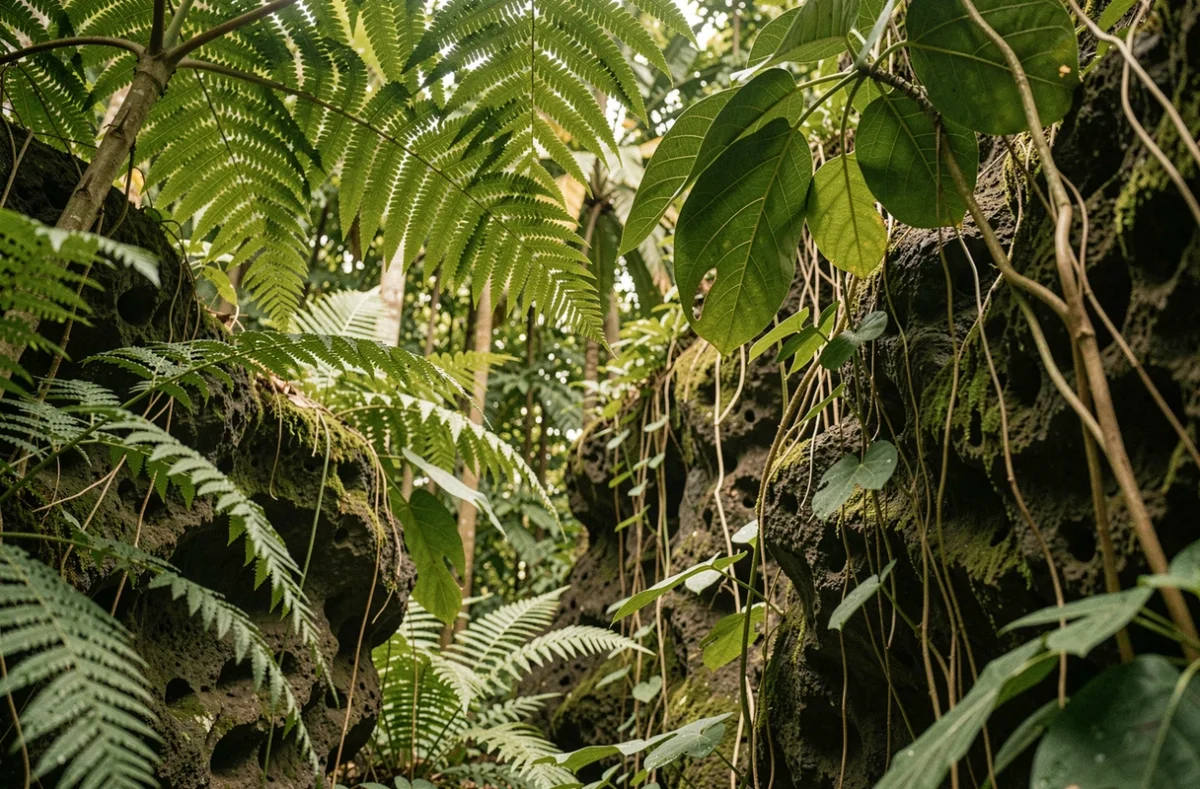
Guadeloupe is often thought of as an island completely devoid of snakes. This idea circulates in travel guides, on forums, and reassures visitors who fear reptiles. The reality is more nuanced: the Guadeloupe archipelago still hosts several species of snakes, but their extreme discretion fuels the confusion.
Colubrids and Typhlops: the snakes that Guadeloupe still hides
Talking about an island “without snakes” is to confuse rarity with absence. Guadeloupe is home to endemic colubrids, known as couresses, as well as the typhlops, a small burrowing snake almost invisible to the naked eye. These species pose no danger to humans.
The couresses primarily live in wooded areas and islets of the archipelago. The Saintes, for example, are a place where observation is still possible. The typhlops, on the other hand, spends most of its life underground or in the forest litter. Its small size and underground habits explain why most locals have never encountered it.
The absence of snakes in Guadeloupe is therefore a misleading shortcut. These reptiles exist, but their rarity makes them almost invisible.
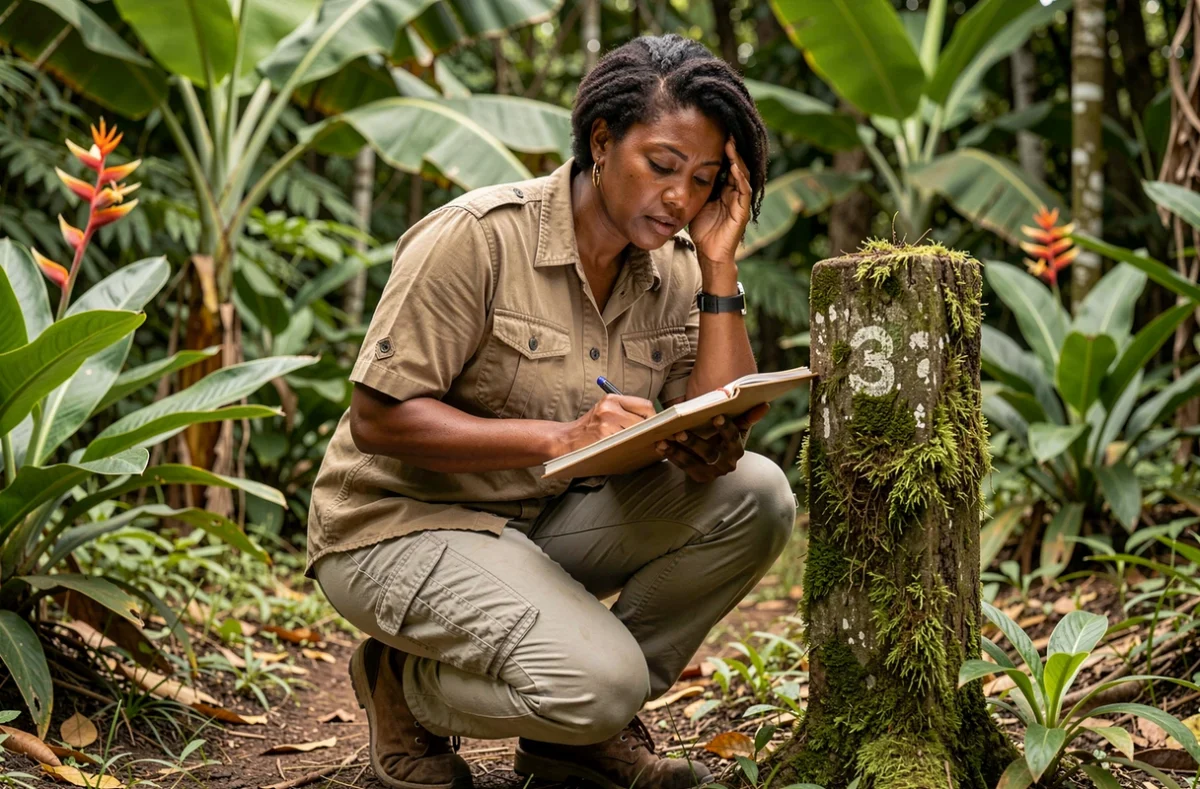
Why snakes have almost disappeared from the French Antilles
Have you ever noticed that Martinique is home to the famous fer-de-lance, a venomous snake, while Guadeloupe has none? This difference between two such close islands can be explained by a mix of geology, climate, and human history.
The geographical isolation of the archipelago
Guadeloupe is a volcanic archipelago born from tectonic activity in the Lesser Antilles. Unlike continental land, a volcanic island receives its species only through maritime colonization. Snakes, being cold-blooded animals, do not tolerate long journeys over saltwater well.
Only a few species have managed to reach the archipelago, likely carried by rafts of vegetation torn away during tropical storms. This mode of colonization remains random. It limits the number of species capable of establishing themselves permanently.
The impact of European colonization on biodiversity
The arrival of European settlers disrupted the ecosystems of the Caribbean. With the ships came predators unknown to the local fauna:
- Rats, capable of devouring snake eggs and juveniles in their hiding places
- Mongoose, introduced to combat venomous snakes in Martinique, but which have spread to several islands in the Antilles
- Stray cats and dogs, opportunistic predators that attack small reptiles
Massive deforestation linked to sugar cane plantations has destroyed much of the natural habitat of snakes. Without forest cover, these animals lose their hunting, refuge, and breeding areas.
In Guadeloupe, this combination of introduced predators and habitat destruction has reduced snake populations to a critical level. The tropical forest of Basse-Terre still offers a refuge, but the available areas remain limited compared to the ecological needs of these species.
Extreme rarity or extinction: what recent science says
Some couresses of the Antilles have not been observed for many years. Scientists are torn between two hypotheses: a silent extinction or survival in still unexplored micro-habitats.
The population is being called upon to help researchers track down these snakes. This participatory approach, relayed by the press in September 2026, shows that the absence of observations does not prove definitive extinction. A discreet, nocturnal, burrowing snake can evade inventories for decades.
The case of the Saint Lucia racer, an extremely rare snake from the neighboring island of Saint Lucia, illustrates this phenomenon well. This species, considered extinct for a long time, was rediscovered on a tiny islet. The survival of some Caribbean snakes depends on small satellite islands, sometimes spared by introduced predators.
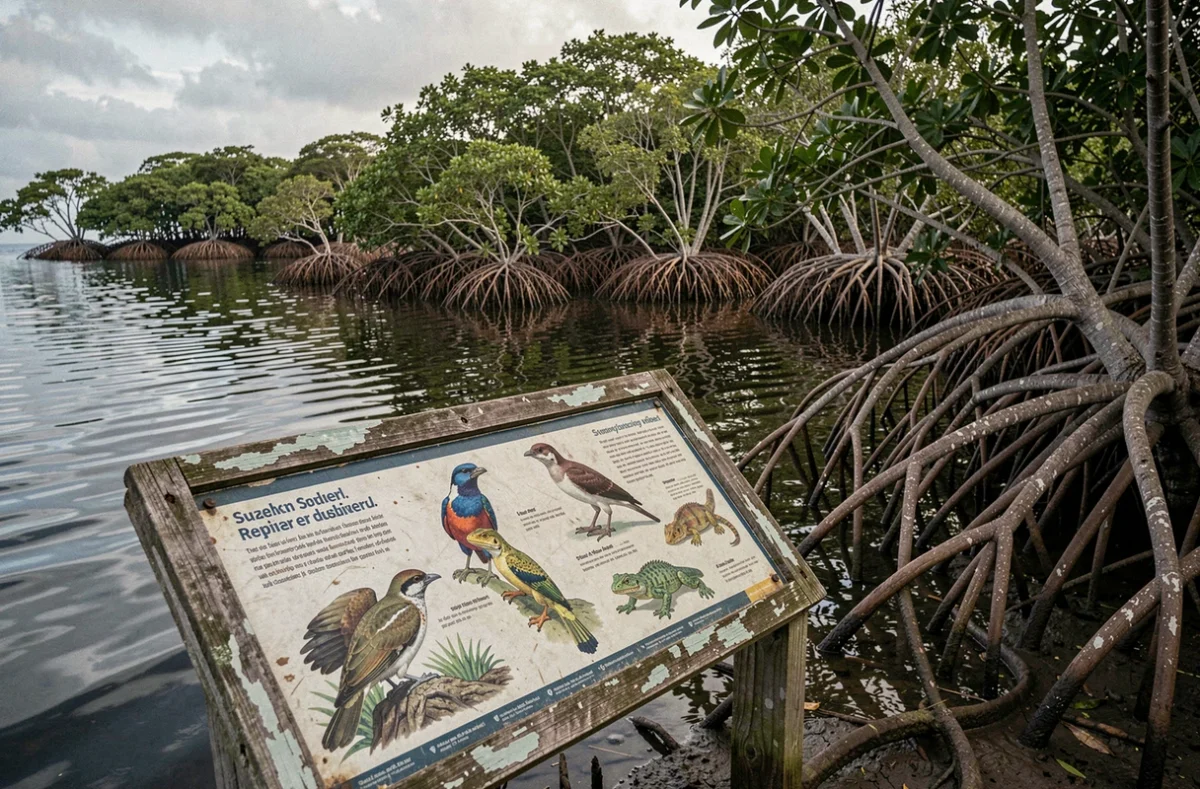
National action plan for threatened reptiles in Guadeloupe
The conservation of Guadeloupe’s snakes has taken a step forward with the publication of the National Action Plan dedicated to skinks, colubrids, and geckos threatened in Guadeloupe and Saint Martin. Announced by the Herpetological Society of France on September 10, 2026, this document structures protection efforts around several axes.
This plan officially recognizes that endemic snakes of Guadeloupe are part of the natural heritage to be preserved. It is no longer just about noting their gradual disappearance, but about taking action to maintain the remaining populations.
The approach is part of a broader Caribbean network. The biodiversity of the French Antilles, often referred to as a global “hotspot,” concentrates a remarkable rate of endemic species over small areas. Each island, each islet can host a genetically distinct population. Losing one of these populations means losing a unique evolutionary lineage.
Caribbean snakes: why Guadeloupe differs from Martinique
The comparison with Martinique comes up consistently. Martinique is home to the fer-de-lance, a venomous snake from the viper family. Guadeloupe has never hosted this species. Why?
The answer lies in the routes of biological colonization. The venomous snakes present in Martinique likely descend from South American ancestors that arrived by sea. Ocean currents, distance from the continent, and the timing of volcanic eruptions determine which species reach which island.
Guadeloupe, positioned slightly further north in the Antillean arc, received a different set of colonizers. Its snakes are all non-venomous and small in size. This geographical distinction explains why the two French departments of the Antilles exhibit such different reptilian faunas despite their proximity.
Guadeloupe is therefore not an island without snakes. It is an archipelago where discreet species survive in increasingly precarious conditions, between residual tropical forest and preserved islets. The real mystery is not their absence, but the fragility of their presence.