Harpagophytum (Harpagophytum procumbens) is often presented as a leading natural anti-inflammatory for arthritic dogs. Scientific reality requires a nuanced view of this claim: direct clinical evidence in dogs remains limited, and the AAHA 2022 pain management guidelines do not classify this plant among the most well-supported nutraceuticals.
Understanding its mechanisms, limitations, and positioning within a multimodal strategy allows for real benefits without overestimating its effects.
Clinical Evidence Level of Harpagophytum in Dogs
The majority of pharmacological data on harpagophytum comes from in vitro studies or research conducted in humans. Harpagosides, the main glycosidic iridoids from the secondary root, inhibit several pro-inflammatory mediators. Extrapolating these results to dogs without randomized controlled trials remains speculative.
Direct evidence in dogs is very limited. The AAHA 2022 guidelines conclude that the evidence is weak for most nutritional supplements studied in dogs, with the notable exception of omega-3 EPA/DHA fatty acids. Harpagophytum does not have a comparable level of evidence.
We recommend never positioning harpagophytum as a substitute treatment. As detailed in the Chabadog article on index-animaux, this plant is part of a complementary approach, not an alternative one. Managing canine osteoarthritis relies on a multimodal approach: weight control, appropriate physical exercise, environmental adjustments, and, if necessary, analgesics prescribed by the veterinarian.
Harpagophytum and Canine Osteoarthritis: Anti-Inflammatory Mechanism of Harpagosides
Harpagosides primarily act on the inflammatory cascade by modulating the expression of cytokines and prostaglandins. This mechanism explains the analgesic effect empirically observed by many practitioners in dogs suffering from chronic joint pain.
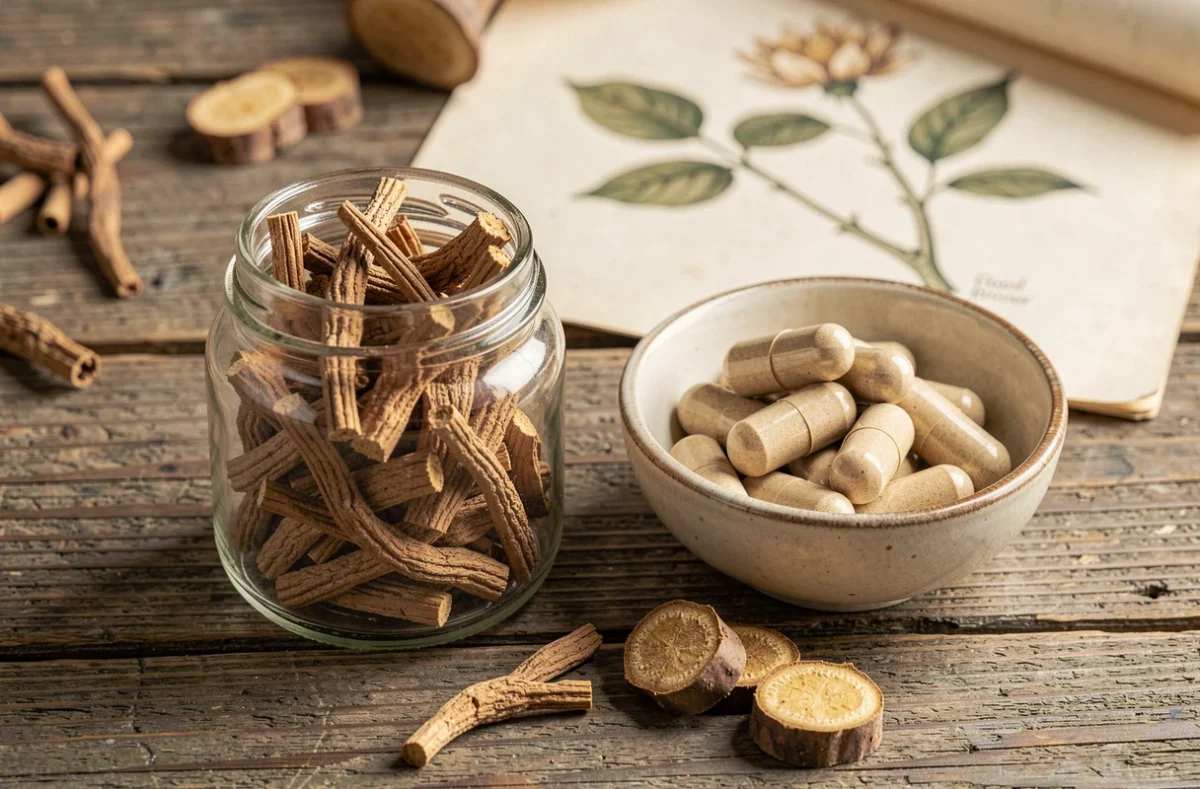
The secondary root (lateral tuber) contains the highest concentration of active principles. The quality of the raw material directly affects the effectiveness of the supplement. A standardized extract of harpagosides is not comparable to a ground whole plant powder with an unknown concentration.
What Distinguishes a Reliable Extract from a Low-Quality Product
- The explicit mention of the harpagoside content on the label or data sheet. Without this information, reproducibility of the dosage is impossible.
- The use of the secondary root of Harpagophytum procumbens (and not H. zeyheri, which has a different phytochemical profile).
- The absence of unnecessary excipients and traceability of the supply chain, with the plant primarily harvested in Namibia and Southern Africa.
Dosage and Duration of Treatment: Tailoring Supplementation to the Dog’s Profile
In practice, we observe that the dosage varies significantly depending on the dog’s size, level of inflammation, and the chosen galenic form (powder, liquid extract, capsule). Any supplementation with harpagophytum must be validated by the treating veterinarian, who will assess potential interactions with ongoing treatments.
Harpagophytum is generally administered in intermittent courses lasting a few weeks, interspersed with break periods. Prolonged administration without interruption increases the risk of digestive side effects, particularly in dogs with sensitive stomachs.
Contraindications to Be Aware Of
The plant is not recommended for pregnant or nursing females. Dogs on non-steroidal anti-inflammatory drugs (NSAIDs) or corticosteroids should not receive harpagophytum without veterinary advice due to the risk of interaction with the gastric mucosa.
Animals suffering from liver or biliary disorders require particular vigilance. Some cholagogue properties of the plant may alter bile flow.

Multimodal Approach to Chronic Joint Pain in Dogs
Harpagophytum alone is not sufficient to manage established osteoarthritis. Recent veterinary recommendations emphasize the combination of several levers to achieve lasting and measurable relief.
- Weight control remains the most determining factor: any excess weight exacerbates the mechanical load on degenerated joints.
- Moderate and regular physical activity (walking on soft ground, swimming) maintains peri-articular muscle mass and limits stiffness.
- Adjusting the living environment (access ramps, orthopedic bedding, non-slip flooring) reduces daily mechanical stress.
- Omega-3 EPA/DHA have, unlike harpagophytum, a stronger evidence level in dogs and can be used as a supplement.
Harpagophytum finds its place in this strategy as a phytotherapeutic adjunct, particularly in dogs for which the veterinarian wishes to limit the long-term dosage of NSAIDs. Its value lies in the gentle inflammatory modulation it provides, not in a powerful analgesic effect comparable to that of a medication.
Regularly assessing the dog’s mobility (ability to stand up, stride length, tolerance to effort) allows for objective evaluation of the supplementation benefits. A supplement that does not produce visible improvement after several weeks of treatment should be re-evaluated with the practitioner, not continued out of habit.