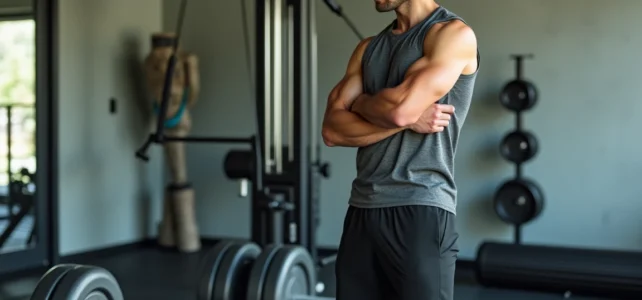
Are you looking for a strength training machine to work out at home, but the variety of available equipment makes the choice seem complicated? Adjustable bench, squat rack, multifunction station: each category meets different needs. Before pulling out your credit card, you need to know what criteria to base your comparison on to find the strength training machine that suits your space, level, and goals.
Multifunction cage or dedicated machine: what biomechanics changes

The marked trend since 2024 is the 3-in-1 or 4-in-1 stations that combine squat rack, high and low pulleys, pull-up bar, and sometimes an integrated bench into a single structure. The Phénix 3-in-1 station, introduced in 2025, illustrates this logic well: concentrating several heavy functions in one device to optimize space without sacrificing biomechanical quality.
Why does this distinction matter so much? A dedicated machine (simple bench, isolated leg press) offers a unique and often well-calibrated movement trajectory. A multifunction cage, on the other hand, provides versatility, but the quality of the trajectories varies greatly from one model to another.
Before choosing, you need to identify how many muscle groups you want to work on regularly. If you mainly target the upper body, an adjustable bench with dumbbells is more than sufficient. If you also want to work on squats, pulls, and presses, a multifunction cage makes perfect sense. To compare the best strength training machine based on these criteria, the most reliable method is to compare the actual workstations offered by each machine.
Home gym equipment and professional gym equipment: a gap rarely explained

Public comparisons often highlight home machines without specifying what separates them from professional machines. The gap between professional equipment and home equipment is real and significant.
Manufacturers specializing in gyms (Laroq, Atlantis, Hammer Strength) design machines with optimized movement trajectories, reinforced welds, higher quality bearings, and significantly higher load tolerance. A pull station on a professional machine offers a smooth and consistent cable path, whereas a home equivalent may exhibit jerks or friction points.
Should you invest in professional equipment for your home gym? Not necessarily. Mid-range home equipment largely meets the needs of a regular practitioner. The key is to avoid entry-level equipment that is too light, where the structure lacks rigidity as soon as you add some weight.
What concretely distinguishes the two ranges
- The sturdiness of the structure: a standard home rack supports less weight than a gym rack. Check the maximum capacity indicated by the manufacturer and compare it to your bars and weights.
- The smoothness of the pulleys: on cable stations, test the pull if possible. A jerky movement indicates low-quality bearings.
- The finishes and comfort of the seats: too thin padding compresses within a few months. The covering of the backrest and seat directly influences stability during exercise.
- The manufacturer’s warranty: reputable brands offer a warranty on the structure (frame, welds) separate from the warranty on wear parts (cables, foams).
Comparison criteria for choosing a strength training machine in 2025
Have you ever noticed that two machines with a similar look can provide very different sensations in use? This discrepancy often comes from details that product sheets do not highlight.
Available space, the first filter above all else
Measure the area you can dedicate to your equipment, accounting for the necessary clearance around the machine to load weights, lie on a bench, or perform a full squat. Allow at least one meter of space behind a squat rack. Many practitioners underestimate this space and find themselves limited in their movements.
Modularity rather than the number of advertised exercises
Manufacturers sometimes list dozens of possible exercises on a single machine. This number doesn’t mean much if most of these exercises are minor variations of the same movement. What matters is the ability to add accessories (handles, pull bars, footrests) and to evolve the machine with your progress.
A modular machine is better than a machine that promises everything at once. If you can add a low pulley six months later or attach a dip station, the initial investment remains relevant over time.
The maximum load and resistance system
Two systems coexist: free weights (bars, dumbbells, plates) and guided weight blocks. Free weights engage stabilizing muscles more. Guided blocks secure the trajectory, which can reassure a beginner.
Always check the maximum load supported by the structure, not just the load provided with the machine. If you progress quickly, a rack designed for too light a load will become a hindrance.
Common mistakes when comparing strength training machines
The first mistake is to rely solely on price. A budget machine that squeaks after three months costs more than a mid-range piece of equipment that lasts for years. Compare the cost per year of use rather than the gross purchase price.
The second mistake concerns the brand. Some retailers offer strength training machines under their own brand, manufactured in the same factories as more well-known brands but sold at a lower price. Investigating the manufacturing origin and materials used gives a better idea of the actual quality than the logo on the frame.
- Never compare two machines without checking their respective maximum load capacities.
- Prefer a machine whose wear parts (cables, foams, pins) are available as spare parts.
- Read reviews that mention several months of use, not just unboxing feedback.
A well-chosen strength training machine remains functional for years. The best comparison starts from your actual practice, not from a list of features on paper. Take the time to define the exercises you will do each week before looking at any catalog.