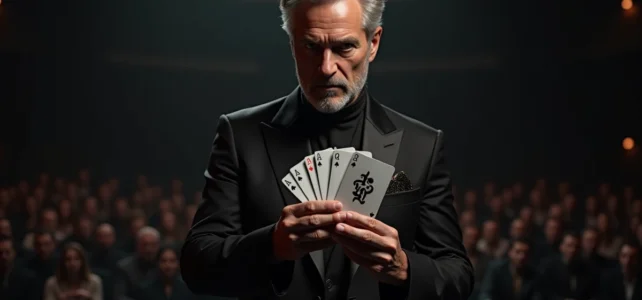
Magic is based on documented scientific principles: attention psychology, optical physics, combinatorial mathematics. This foundation has not changed since Robert-Houdin. What has changed is the technological environment in which these principles apply, and the tensions this generates within the profession.
When Neuroscience Research Takes Hold of Magic Tricks
Since the end of the 2010s, university laboratories have been integrating protocols derived from illusionism into their research on human perception. The “Science of Magic” program, led by Gustav Kuhn at the Magic Lab of Goldsmiths University in London, is the best-documented example. Kuhn uses card tricks and classic misdirections to study the mechanisms of selective attention and the flaws of visual perception.
This type of collaboration produces a dual effect. Neuroscientists gain experimental protocols that decades of stage practice have refined. Magicians, for their part, gain a deeper understanding of what happens in the spectator’s brain at the precise moment the illusion occurs. An article exploring illusionism and the magician’s brain on Les Archivistes details this cognitive mechanism with precision.
The practical consequence is measurable: magicians adjust their routines based on data about attention, not just on stage intuition. The gesture of misdirection, once passed down through apprenticeship, becomes a reproducible object of study.

Digital Magic vs. Low-Tech Aesthetics: A Real Professional Divide
The arrival of smartphones, secret applications, and LED screens in close-up performances has opened a debate that has been ongoing in the specialized press for several years. Magazines like Genii and Vanish Magazine have published articles from stage magicians between 2022 and 2024 posing a direct question: when the illusion relies on a gadget, does the audience still perceive magic or a technological demonstration?
The distinction seems subtle, but it touches the heart of the profession. A classic mentalism trick works because the spectator finds no immediate rational explanation. If the same effect is produced by a hidden application on a phone, the sense of mystery collapses as soon as the spectator suspects the existence of a digital tool.
Two Responses Coexist in the Profession
Some artists fully embrace technology and build shows around interactive screens, augmented reality, or light drones. Their argument: magic has always integrated the innovations of its time, from 18th-century automata to 19th-century two-way mirrors.
In response, a movement advocates for an analog aesthetic, using simple props (ropes, coins, playing cards) and a stripped-down staging. These magicians believe that the mystery arises from the apparent absence of technological means. The spectator cannot attribute the effect to a screen or a sensor, which preserves the emotion inherent to magical art.
Field feedback diverges on this point: some audiences, especially younger ones, spontaneously associate any spectacular effect with an application or digital trickery, even when the trick is purely manual. This technological presumption complicates the work of illusionists who choose the analog path.
Mentalism and Personal Data: The Constraints of GDPR and the AI Act
A less visible angle concerns mentalism effects that exploit the spectator’s digital data. Some performances rely on the discreet collection of information via social media, facial recognition, or the analysis of publicly accessible data. The magician then “guesses” personal details that the spectator has not consciously communicated.
European data protection legislation, particularly the GDPR and discussions surrounding the AI Act initiated since 2021, impose concrete limits on these practices. Three points of friction emerge:
- The collection of data without explicit consent from the spectator, even in an entertainment context, potentially conflicts with GDPR obligations regarding informed consent
- The use of facial recognition in a public performance raises questions that the AI Act classifies as high-risk uses, with transparency obligations that the magical format makes difficult to comply with
- The temporary storage of personal data collected during a performance (names, photos, browsing history) requires deletion protocols that most independent artists do not formalize
The available data does not allow for conclusions about the number of magicians actually affected by these constraints. However, the European regulatory framework redefines what a mentalist can legally do on stage, and this legal reality is recent.

Magical Art and Public Perception: What Science Does Not Resolve
Research in neuroscience explains why a trick works on a cognitive level. It does not answer a broader question: why does the audience continue to pay to see a show when they know, by definition, that everything is fake.
Stage magic and mentalism share with cinema or theater this tacit contract of voluntary suspension of disbelief. The spectator agrees to be deceived. The difference lies in the fact that the magician explicitly denies trickery during the performance, whereas the actor does not claim to be genuinely their character.
This particularity places magical art in a zone that neither cognitive psychology nor the sociology of performance has fully mapped. The work of Kuhn and his colleagues sheds light on perceptual mechanisms, but the emotional dimension of mystery, what makes an informed adult still experience wonder, remains a terrain where current scientific models reach their limits.
The transformation of magic in the modern era is therefore not limited to the addition of technology in performances. It plays out on three simultaneous fronts: scientific research that dissects cognitive springs, the aesthetic debate between digital and analog, and a European legal framework that redraws the boundaries of what is permissible. The contemporary magician navigates between these three constraints, and it is perhaps this tension that best defines today’s illusionism.