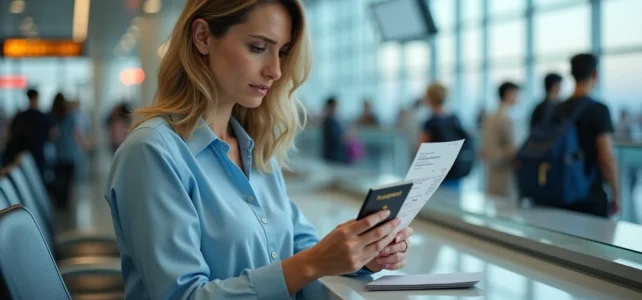
The name printed on a plane ticket is not just a simple administrative formality. At the time of boarding, the airline compares the information on the ticket with the passenger’s identification document. A discrepancy, even a minor one, can lead to a denial of boarding or high modification fees. The question arises: which name errors on a plane ticket actually cause issues, and which ones go unnoticed?
Compound names, hyphens, and apostrophes: the trap of the absence of IATA standards
Competitors detail classic typographical errors, but a more structural problem often goes unnoticed. IATA does not have a unified standard for registering compound names that include hyphens, spaces, or apostrophes. The result: the same passenger may see their name encoded differently depending on the booking system used.
A traveler with the name “Le Bras-Dupont” on their passport may find themselves registered as “Lebrasdupont,” “Le Bras Dupont,” or “Lebras-Dupont” depending on the booking platform. This lack of standardization creates unintentional discrepancies between the ticket and the identification document, without the passenger having made any typing error.
To verify consistency, check the rules to know on Les Voyageurs before finalizing any reservation, especially if your name contains a special character.
The problem worsens with automated boarding gates equipped with biometric scanners. These systems compare the scanned identification document with the ticket data algorithmically. A hyphen present on the passport but absent from the ticket may be enough to trigger an alert, even if a human agent would have overlooked the discrepancy without difficulty.

Name correction fees: what airlines charge
The distinction between a “minor correction” and a “name change” determines the cost of the operation. Airlines do not all apply the same thresholds.
| Type of error | Usual handling | Indicative cost |
|---|---|---|
| Typographical error (1 to 2 characters) | Free or low-cost correction, often possible online | Free to moderate |
| Error of more than 3 characters | Considered a name change by most airlines | Significant fees, sometimes close to the ticket price |
| Reversal of first name/last name | Correction generally accepted with proof | Variable by airline |
| Complete change (marriage, divorce) | Requires an official document (marriage certificate, court decision) | Standard modification fees |
Since 2024, several low-cost airlines have tightened their name modification conditions after ticket issuance. The fees charged can now reach the price of the ticket itself, a trend that contrasts with previously more flexible policies. This evolution makes verification at the time of booking even more crucial.
Correction via the agency or the airline: two distinct paths
When a ticket is purchased through an online agency, the correction request generally must go through that agency, not directly through the airline. This detail extends the timelines and may add intermediary fees.
In contrast, a ticket purchased directly from the airline allows for faster processing. Some airlines offer an online correction form accessible in the first hours following the reservation.
Plane ticket and identification document: checks to make before validation
The basic rule is simple: the name on the ticket must exactly match the identification document used for boarding. Not the common name, not a nickname, not an abbreviated version.
- For a domestic flight in France, a national identity card is sufficient. The name and first name listed on the card are the reference to reproduce on the reservation.
- For an international flight, the passport is the authoritative document. Secondary first names are generally not required on the ticket, but the first name and last name must match those on the passport.
- For passengers who have recently changed their name (marriage, adoption), the valid identification document takes precedence. If the passport still bears the old name, it is that old name that must appear on the ticket.
A common error concerns travelers who book with their identity card but travel with their passport, or vice versa. The two documents may present slightly different spellings of the same name, particularly for accents or special characters.

First name on the plane ticket: should all be indicated?
One first name is sufficient in the vast majority of cases. Airline booking systems are designed to work with the first name and last name. Adding all of one’s first names is neither mandatory nor recommended: it increases the risk of typographical errors without providing any additional security.
The technical limitations of booking systems (GDS) also play a role. Some truncate names that are too long, others automatically remove accents or merge spaces. A passenger who carefully enters their three first names may end up with a truncated ticket that no longer matches anything.
The case of young children
For babies traveling on a parent’s lap, the name must still appear on the reservation and match the child’s identification document. A family record book does not replace an identity card or passport for boarding, even for an infant on an international flight.
The best protection against name errors remains a simple reflex: open your identification document when filling out the reservation form and copy the information character by character. This gesture of a few seconds avoids corrections that, depending on the airline and the timing, can cost as much as the ticket itself.