
You are preparing for a train or plane trip and are looking for a tag to attach to your suitcase before departure. The classic reflex is to grab a cardboard tag at the train station counter, but today there are downloadable PDF templates available from home, ready to print on standard paper. This time-saving change is a game-changer, especially when managing multiple bags for the whole family.
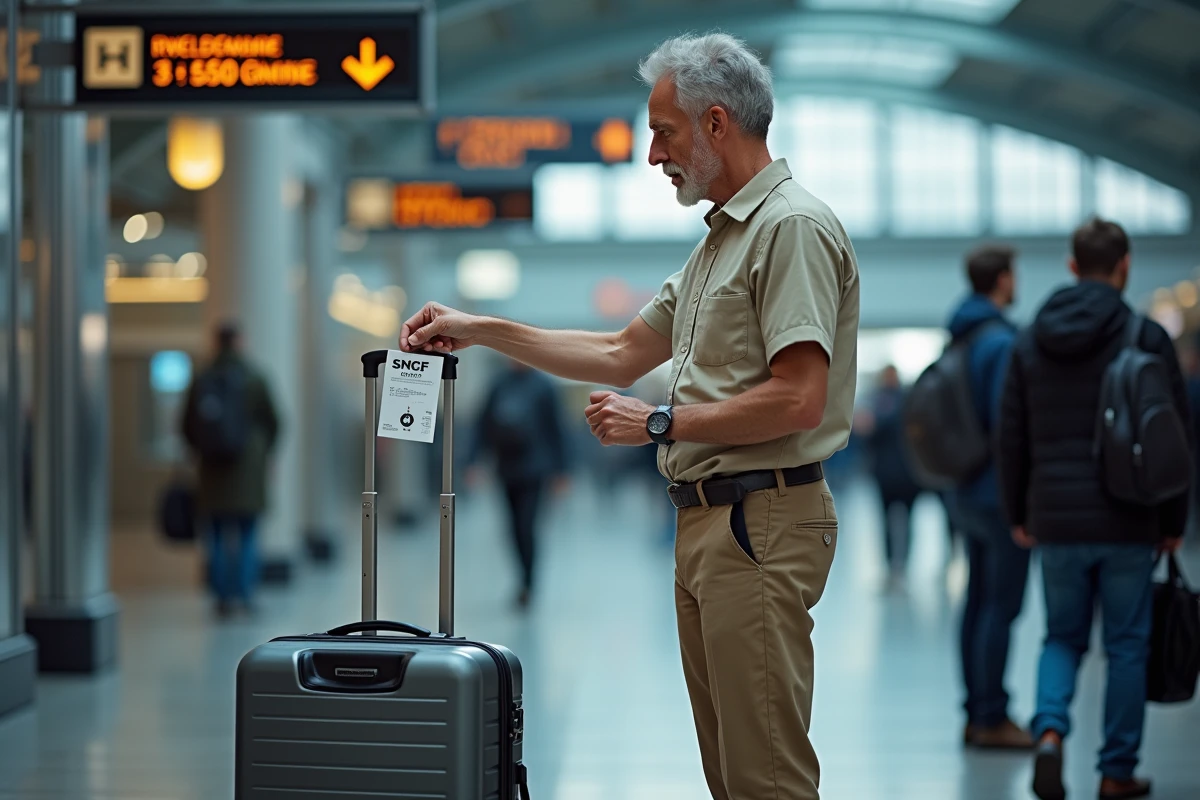
Luggage tag with QR code: what SNCF has changed since 2023
Since 2023, SNCF has strengthened the labeling requirement on TGV INOUI trains. The onboard teams are now authorized to refuse an unidentified bag in case of crowding or security issues. The tag is no longer just a recommendation; it is a boarding condition in certain situations.
The most notable change concerns the protection of personal data. The official service (etiquettebagage.sncf.com) generates a tag with a QR code where your contact details are no longer visible in plain text. Name, address, and phone number are stored in a database accessible only by authorized agents. A traveler sitting next to you can no longer read your address on your suitcase.
You can retrieve SNCF and airplane luggage tags to print in the form of PDF templates compatible with a home printer, which avoids having to go to the counter on departure day.
Another concrete advantage: this QR tag is reusable. Once generated, it downloads as a PDF, prints on ordinary paper, and remains valid for multiple trips. Unlike airplane tags, which are recreated at each check-in, this one accompanies you throughout the year.
Printable airplane tags: the limits of the universal template
You may have seen websites offering a unique “airplane compatible” PDF template. The idea is appealing, but the reality is more nuanced. Low-cost airlines often impose their own tags, generated during online check-in. A generic document printed at home may not necessarily be accepted for checked baggage.
Specifically, here’s what works and what doesn’t:
- For a cabin bag, a printed name tag from home is sufficient in the vast majority of cases, regardless of the carrier. It serves to identify the owner in case of forgetting on board.
- For checked baggage, the airline attaches its own barcode tag at the counter or baggage drop-off. Your personal tag remains useful as a supplement, but it does not replace the carrier’s tag.
- More and more airlines recommend indicating the IATA code of the destination airport (three letters, e.g., CDG for Paris-Charles de Gaulle) on the tag. This detail speeds up sorting in case of loss.
A generic PDF template thus retains its value for cabin baggage and as a safety backup for checked luggage. It never replaces the official airline tag for automated tracking.
Paper, cutting, attachment: successfully printing at home
Downloading a PDF is quick. Obtaining a readable tag after several days of travel requires a bit more attention at the time of printing.
Choice of paper and weight
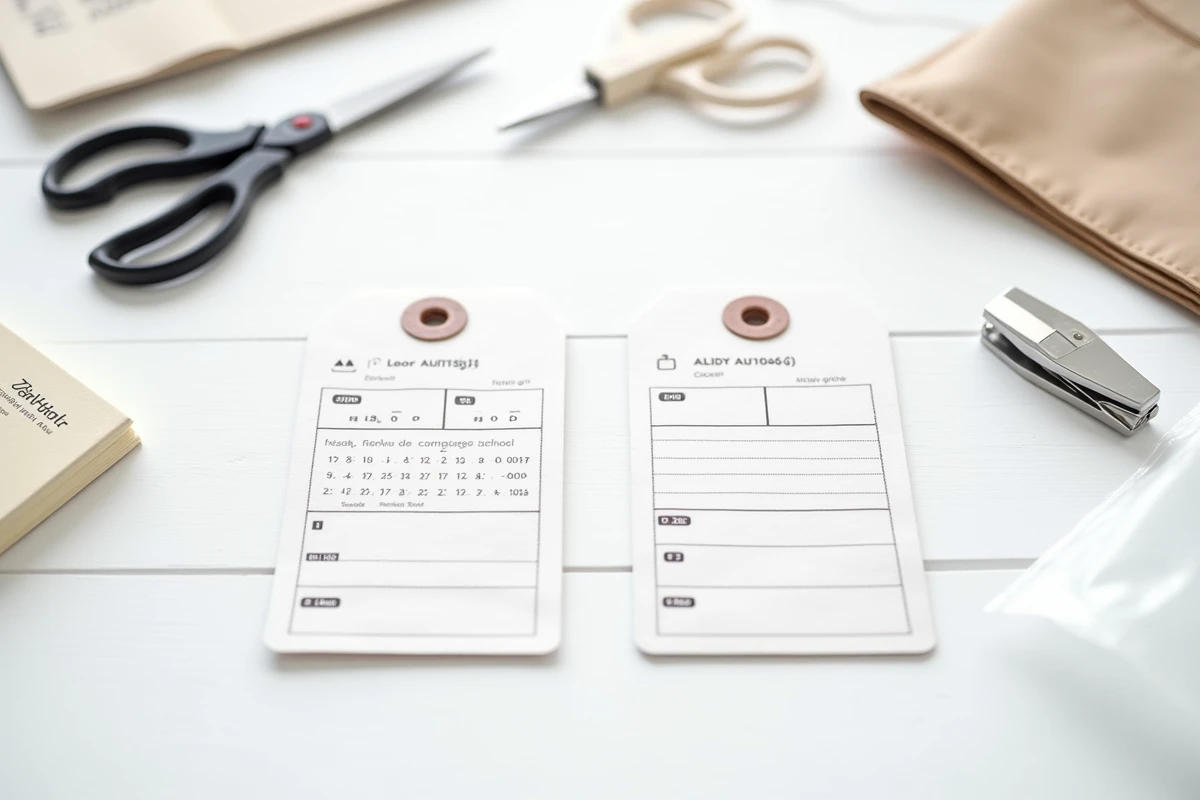
A standard office paper works, but it tears easily when exposed to moisture or friction in a hold. Opt for a weight dense enough to withstand handling. Adhesive paper is a practical alternative: the tag sticks directly to the suitcase shell without additional attachments.
Laminating and protection
If you don’t have adhesive paper, print on regular paper and then slide the tag into a clear plastic sleeve. Some travelers use self-adhesive laminating film to seal the tag. This precaution protects the ink, which tends to smudge when exposed to rain or condensation in unpressurized holds.
Attachment to the suitcase
A hole punched in the corner of the tag allows for a plastic tie or cord to be passed through the handle. Avoid using tape alone, which can peel off due to heat. A plastic zip tie remains the most reliable attachment for checked luggage travel.
Information to include on a train and airplane luggage tag
Whether you are traveling on a TGV INOUI or on a domestic flight, the useful information is the same. The SNCF QR code tag masks this data behind a scan, but if you use a classic template, it remains visible.
- Name and surname of the owner, written legibly with a ballpoint pen (gel ink smudges more easily).
- Mobile phone number, reachable during the trip. Remember to add the international code if you are traveling abroad.
- Destination address rather than your home address, to avoid signaling an empty residence during your vacation.
- IATA code of the arrival airport for air travel, to facilitate sorting in case of lost luggage.
On the SNCF QR tag, this information is filled out online when creating the PDF. Only the QR code appears on the printed document, which represents a real improvement in privacy compared to the old cardboard models.
The luggage tag remains a simple gesture that takes less than five minutes to prepare at home. Between the reusable SNCF QR code and the PDF templates suitable for air travel, the most effective approach is to print two or three copies in advance and keep them in your travel kit. An identified bag has a much higher chance of being reunited with its owner than an anonymous suitcase on a conveyor belt.